If you picture Peninsula living as a tradeoff between nature and convenience, Belmont’s hillside neighborhoods may surprise you. You can have quiet residential streets, quick access to trails and open space, and still stay connected to everyday errands, transit, and nearby city centers. If you are exploring Belmont as a buyer, seller, or future resident, this guide will help you understand what daily life in the hills actually feels like. Let’s dive in.
What makes Belmont’s hills distinct
Belmont is a compact San Mateo County city that describes itself as a place of wooded hills, Bay views, and open space. For hillside living, the city’s San Juan Hills and Western Hills areas are especially important because local planning focuses on preserving natural terrain and environmental sensitivity.
That planning approach shapes the experience you feel on the ground. Instead of a flat, uniform neighborhood pattern, Belmont’s hillside areas tend to feel more tucked into the landscape, with homes, roads, and open space working around the terrain rather than replacing it.
How the hillside setting feels day to day
One of the biggest draws of hillside Belmont is the setting itself. The mix of elevation, trees, and changing light can make blocks feel more private and more connected to nature than many flatter Peninsula neighborhoods.
The local climate also adds to that character. Regional NOAA information suggests that the marine layer can move inland and cool temperatures, while coastal mountains can limit how far it reaches. In everyday terms, that means one hillside street may feel cooler or foggier in the morning, while another may get more sun.
Nearby Redwood City climate normals support the Peninsula’s generally mild conditions. The NOAA station reports an annual mean temperature of 59.4°F, about 19.02 inches of precipitation, no measurable snow, a mean daily maximum of 81.0°F in July, and a mean daily maximum of 58.6°F in December.
For you, that often translates to cool mornings, moderate afternoons, and comfortable year-round living. It is not a guarantee for every block, but it is a useful picture of the broader climate pattern around Belmont.
Housing character in hillside Belmont
Belmont’s hillside districts are regulated as HRO-1 and HRO-2. According to the city, those areas are shaped by steep slopes, geologic and soils hazards, and limited roadway access.
The city’s policy goal in these hillside areas is to preserve natural terrain, reduce grading and density, and encourage clustered homes so open space remains part of the visual experience. That helps explain why hillside Belmont often feels less built out and more terrain-sensitive than flatter neighborhoods nearby.
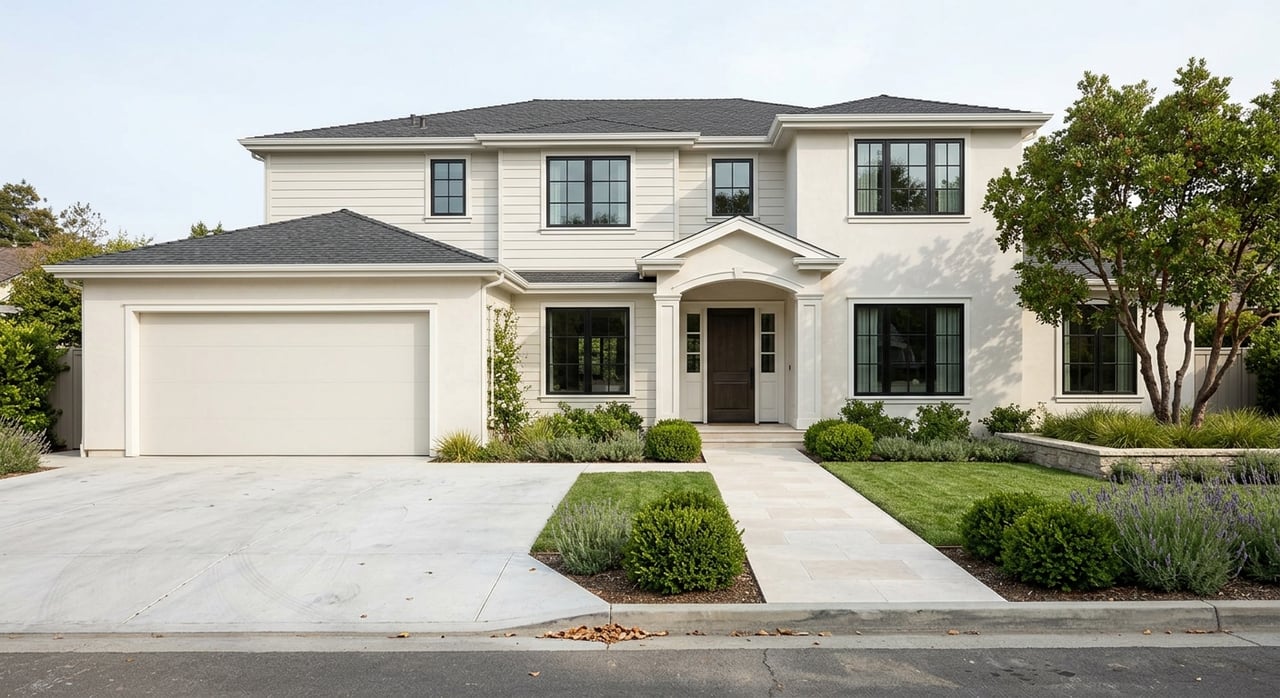
Most single-family homes in Belmont are in R-1 districts, and the city’s residential design rules focus on bulk reduction, step-backs, articulation, and daylight planes. In practical terms, homes are reviewed for how they sit on the slope, how tall they appear from the street, and how well they fit the site.
If you are home shopping, that means hillside homes may offer a different kind of appeal than a standard grid neighborhood. You may notice more variation in siting, frontage, and street presence, along with a stronger relationship between the home and the natural contours of the lot.
Street life and neighborhood rhythm
Daily life in Belmont’s hillside areas is generally more residential and quiet. The research points to a pattern of slope-adapted homes, limited roadway access in some hillside zones, and a setting where open space remains a visible part of the neighborhood experience.
That does not mean isolated living. It means the pace often feels calmer, with the hills functioning as primarily residential areas while shopping, transit, and denser activity stay concentrated closer to downtown Belmont and the station corridor.
For many buyers, that balance is the key attraction. You can enjoy a more tucked-away home environment without giving up practical access to the rest of the Peninsula.
Parks and trails close to home
Outdoor access is one of the clearest lifestyle advantages of living in Belmont’s hills. The city says Belmont offers 14 developed parks across 31 acres, plus 337 acres of open space for hiking, running, and bike riding.
The city also notes that parks and open spaces are generally open from 30 minutes before sunrise until 30 minutes after sunset. That schedule fits naturally with early walks, after-work outings, and weekend trail time.
Waterdog Lake and Open Space
Waterdog Lake & Open Space is the signature trail area for hillside Belmont. The city says it includes varying trail lengths, three trailheads, and sunrise-to-sunset access.
For everyday living, that means you may be able to build outdoor time into your normal routine instead of saving it for a special trip. A short morning loop, a dog walk, or an evening hike can feel much more realistic when the open space is part of your own city.
Twin Pines Park routines
Twin Pines Park adds a different kind of recreation option. The city describes it as a 19-acre ravine park along Ralston Avenue with a brook, picnic areas, shaded rest spots, open-space trails, and civic facilities including the Belmont Historical Society Museum and the Senior and Community Center.
The city also notes free Sunday afternoon concerts there in summer. That gives the park a recurring role in local life, not just as a green space, but as a place people return to for low-key routines and seasonal events.
More nearby open space
Belmont’s parks and open-space resources also include places such as San Juan Canyon. The city’s Salson Trail project page describes an unpaved fire road that also provides emergency access across about 100 acres of open space.
The city’s Children’s Outdoor Bill of Rights points residents toward experiences like the Bay Trail via the Ralston Avenue bike route, Waterdog, and other low-cost outdoor activities. Together, these details reinforce how strongly outdoor access is woven into daily life in Belmont.
Getting around from the hills
A common question about hillside living is whether it feels too disconnected. In Belmont, the answer is often more practical than buyers expect because transit and core services are built into the city.
Belmont Caltrain Station is located at 995 El Camino Real. SamTrans lists accessibility features, an elevator, 18 bike racks, BikeLink e-lockers, and 375 parking spaces there.
SamTrans also lists station connections including ECR, Route 397, Route 260, and Redwood LIFE Caltrain connections. If you commute or like having rail access as part of your weekly routine, that infrastructure adds real convenience.
Where errands tend to cluster
Belmont treats downtown as a Priority Development Area because of its proximity to transit, jobs, shopping, and services. The Belmont Village Specific Plan also focuses on the area around the Caltrain station.
In practical terms, that means many daily errands and service stops are concentrated near the station corridor, while the hills remain quieter and primarily residential. For some residents, that creates a useful split between home life and errand life.
The city also highlights Carlmont Village Shopping Center as one of Belmont’s commercial nodes. That matters for quick errands, convenience shopping, and casual dining when you want something nearby.
Ralston Avenue’s role
Ralston Avenue is Belmont’s key east-west spine. The city notes that it runs from State Route 92 to U.S. Highway 101 and connects hillside homes to downtown, the station, and nearby Peninsula cities.
If you live in the hills, that road network plays a major role in how your day flows. It is one of the reasons hillside Belmont can still feel workable for commuting, shopping, and getting around the Peninsula.
Why buyers are drawn to hillside Belmont
For many buyers, hillside Belmont offers a mix that can be hard to find in one place. You get a setting shaped by wooded slopes, open space, and a quieter residential feel, along with access to transit, shopping, and regional connections.
You may also appreciate the way local planning has tried to preserve natural terrain and visual openness in the hillside areas. That gives these neighborhoods a distinct identity that feels different from more uniform suburban patterns.
If you are comparing Belmont with other Peninsula locations, the hills may stand out most for their blend of scenery and practicality. They are not purely remote, and they are not purely urban. They sit somewhere in between, which is exactly the appeal for many households.
What sellers should understand
If you own a home in Belmont’s hillside neighborhoods, lifestyle is a major part of the story. Buyers are often looking not only at square footage or finishes, but also at how the home connects to the slope, the street, the views, and nearby outdoor amenities.
That means marketing should clearly explain the day-to-day experience of the location. Access to trails, a quieter residential rhythm, proximity to commercial nodes, and the city’s terrain-sensitive character can all help buyers understand what makes hillside Belmont distinct.
A strong listing strategy also benefits from local context. When buyers understand why these neighborhoods look and function differently from flatter parts of the Peninsula, they can better appreciate the value of the setting.
The everyday takeaway
Overall, hillside Belmont reads as a mostly residential, outdoor-oriented part of the Peninsula. Quiet streets, slope-adapted homes, nearby parks and trails, and access to transit and errands all combine to create a lifestyle that feels both grounded and convenient.
If that combination fits your goals, it helps to work with a team that can explain not just the homes, but the logic of the neighborhood itself. For tailored guidance on buying or selling on the Peninsula, connect with the Heather Lin Real Estate Team.
FAQs
What is daily life like in Belmont’s hillside neighborhoods?
- Daily life in Belmont’s hillside neighborhoods is generally quieter and more residential, with easy access to open space, trails, and parks, while errands and transit are concentrated closer to downtown and the Caltrain station.
What parks and trails are near Belmont hillside homes?
- Belmont’s hillside living is closely tied to outdoor access, including Waterdog Lake & Open Space, Twin Pines Park, San Juan Canyon, and other city open-space areas for hiking, walking, running, and biking.
How is the weather in Belmont’s hillside areas?
- Belmont’s hillside areas are influenced by the Bay Area marine layer and local elevation differences, so conditions can vary by block, but nearby climate normals support a generally mild pattern with cool mornings, moderate afternoons, and no measurable snow.
Are Belmont hillside neighborhoods convenient for commuting?
- Belmont hillside neighborhoods can be practical for commuting because the city has Caltrain access, SamTrans connections, and roadway links like Ralston Avenue connecting residential hillsides to downtown, Highway 101, and State Route 92.
What makes homes in Belmont’s hillside neighborhoods different?
- Homes in Belmont’s hillside neighborhoods are shaped by steep terrain and city design rules that emphasize fitting development to the slope, preserving natural landforms, and maintaining open-space character.
Where do Belmont residents handle everyday errands?
- Everyday errands in Belmont are often centered around downtown near the Caltrain corridor and commercial areas such as Carlmont Village Shopping Center, while the hillside neighborhoods remain primarily residential.