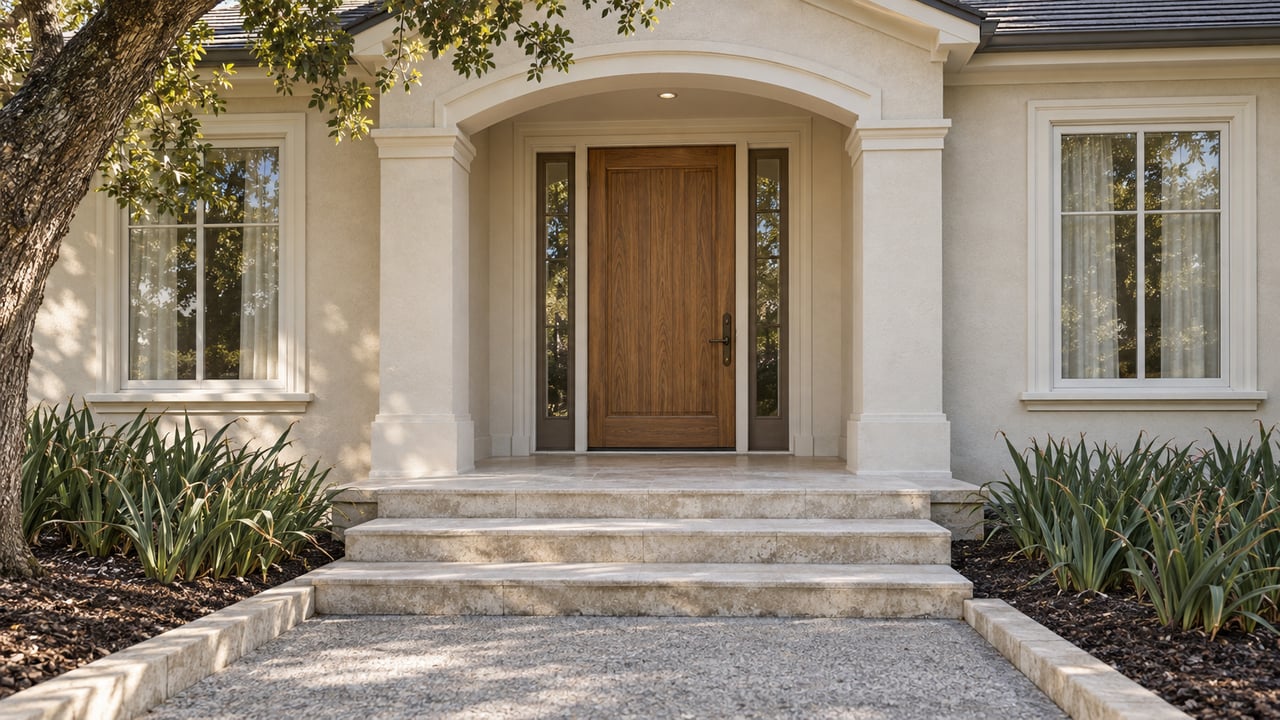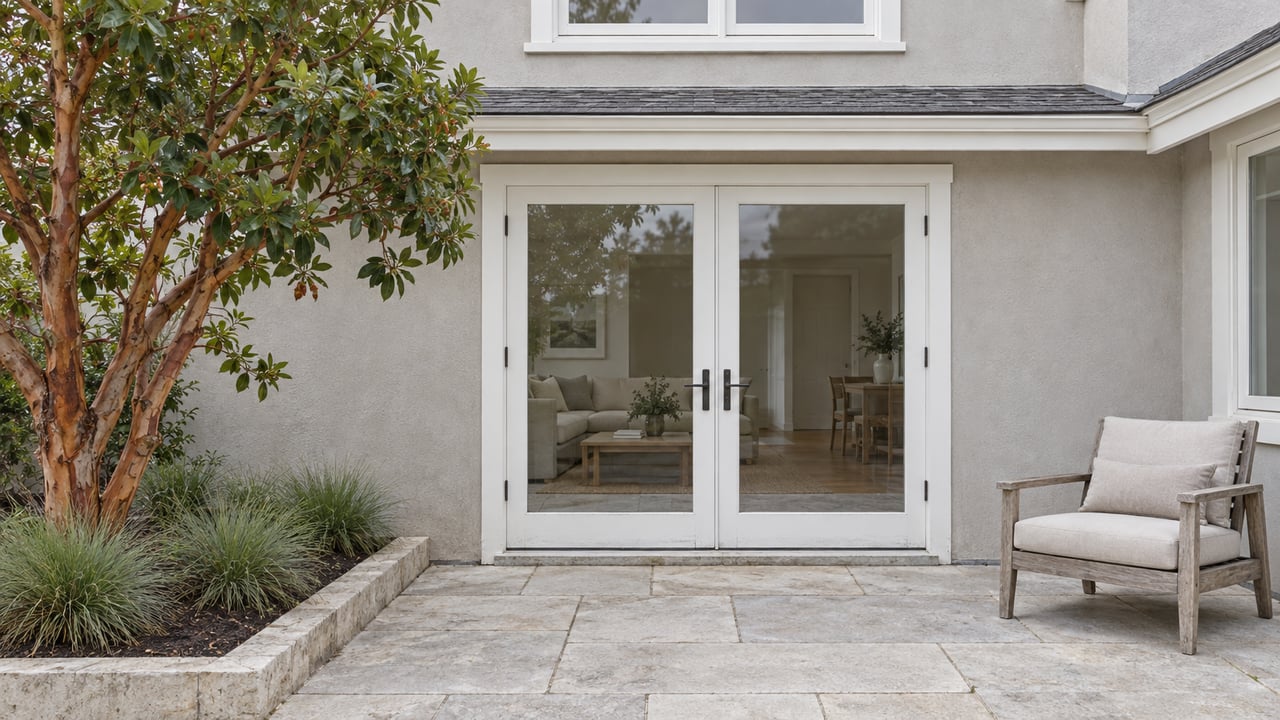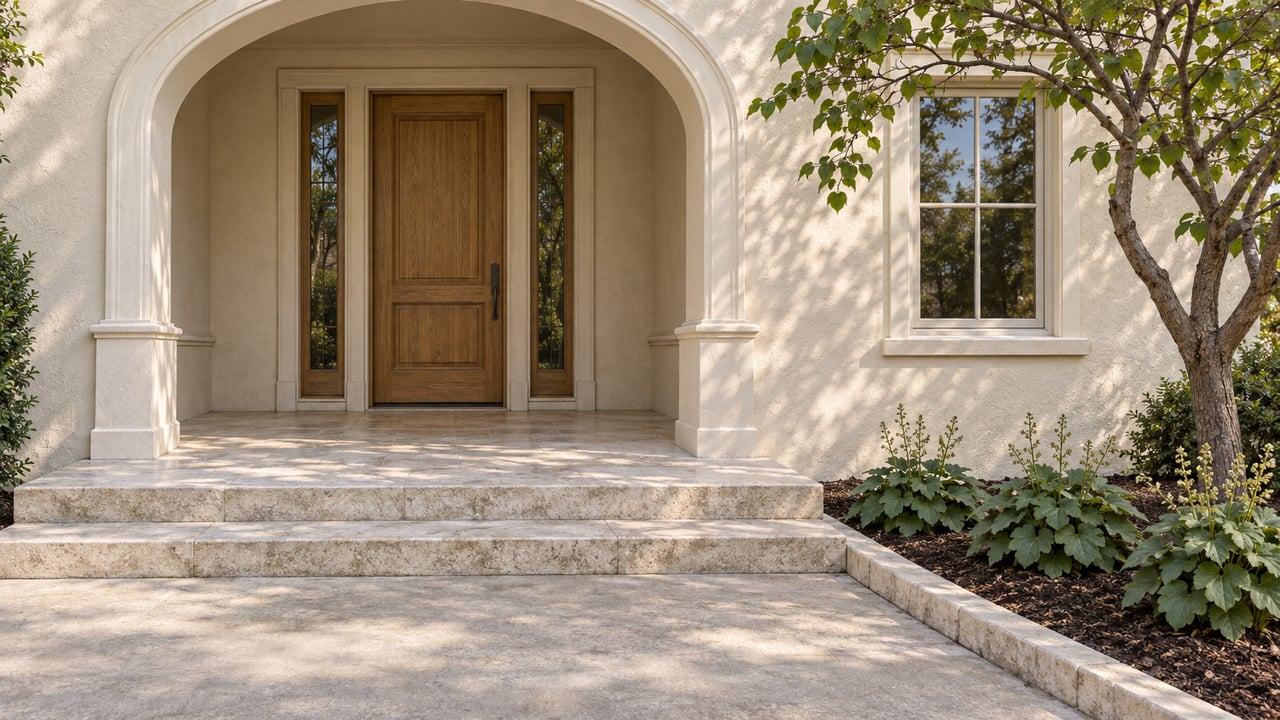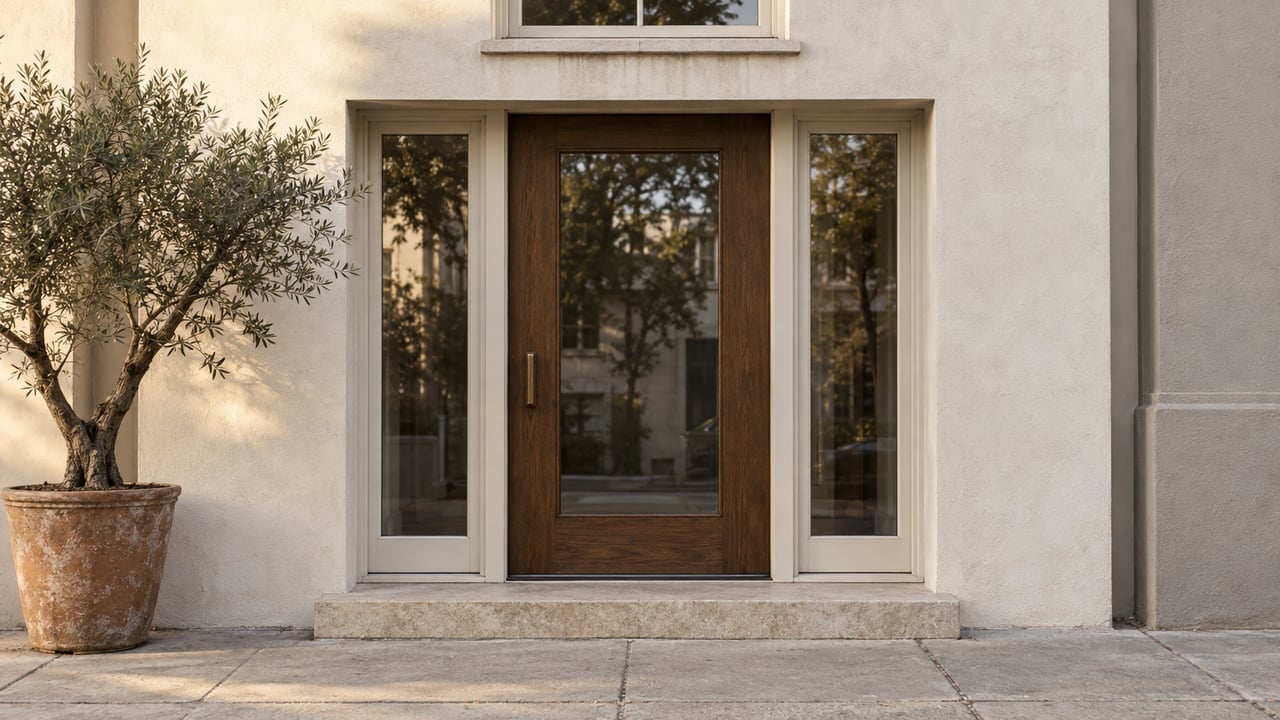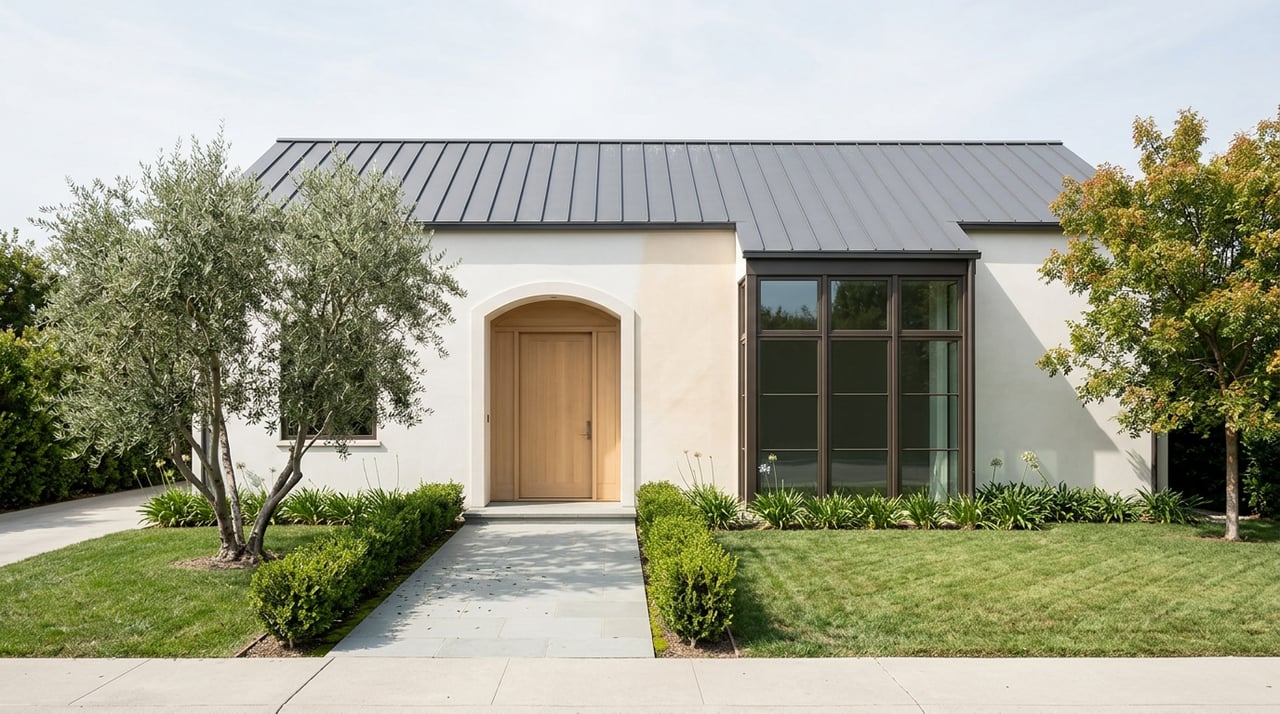
Two homes went under contract in Los Altos this year for almost the same price. One was a compact three-bedroom ranch built in the 1950s, dated inside, sitting on a flat, rectangular quarter-acre corner lot. The other was a fully renovated four-bedroom two streets over, updated kitchen, new systems, landscaped yard, on a lot with an awkward slope and a shared easement along one side. Same neighborhood. Same rough price. Completely different reasons a buyer would want either one.
That's not a coincidence and it's not a fluke of timing. It's what happens when a city's price is really a land price with a house sitting on top of it, and the house is often the smaller part of the equation.
Four Sources, Four Different Measures
If you've been pulling numbers on Los Altos this year, you've probably noticed they don't agree. A three-month trailing sales window through May 2026 put the median at $4.2 million, down nearly 14 percent from the same period the year before. A home value index for July 2026 showed the average sitting closer to $4.6 million, up about 7 percent year over year. A different tracker pegged the July 2026 median sale at $4.47 million, up almost 12 percent year over year. And a weekly snapshot of active list prices in early September 2026 showed the median asking price at $5.3 million.
None of those numbers is wrong. They're measuring different things. A trailing sales median tells you what closed in a specific window. A value index estimates worth across the whole housing stock, including homes that haven't sold recently. A syndicated print captures one month's closed transactions. A weekly list-price snapshot reflects what sellers are asking right now, not what buyers have agreed to pay.
Zoom into a single sub-area and the picture gets sharper. Central Los Altos posted a three-month median of $5.4 million through June 2026, up 7.7 percent year over year, on just 19 closed sales, with homes averaging 8 days on market. That's a small, land-constrained core pulling hard in one direction while other pockets of the city pull in another. When four credible sources can't agree on one number, the disagreement itself is the data point: Los Altos isn't one market wearing four different price tags. It's several small markets, each shaped by how much buildable land sits under the house.
What Builders Are Actually Bidding On
Here's the mechanism that explains the two homes at the top of this piece. When a builder or a buyer with construction plans evaluates an older, smaller home in Los Altos, the existing structure barely factors into the price they're willing to pay. What they're really pricing is the dirt.
The standard approach works backward from the finished product: project what a new home on that lot would sell for, subtract construction costs, permitting and design review fees, financing costs, and a required profit margin, and whatever's left is the most the land itself is worth. Frontage, lot shape, slope, mature trees, easements, and how much square footage the zoning will actually allow all move that number more than the age or condition of whatever's currently standing there.
That's why the flat quarter-acre ranch in our opening example held its own against the fully renovated home on the awkward, sloped lot. The renovation added real value, but it couldn't overcome a lot that limits what can eventually be built on it. In a high-demand, design-review-heavy city like Los Altos, entitlement potential and end-buyer pricing drive land value far more than the depreciated cost of the existing structure.
Why Two Nearly Identical Lots Can Be Worth Different Amounts Right Now
There's a newer wrinkle in this land math that didn't exist a few years ago. California's SB 9 allows up to two primary units on some single-family lots and can permit an urban lot split when a set of objective local standards is met. Los Altos adopted its own ordinance spelling out exactly what those standards are: a minimum lot size after any split, a minimum frontage requirement, an owner-occupancy affidavit for anyone pursuing a split, and a specific list of site conditions that disqualify a property altogether.
What that means in practice is that two lots that look nearly identical on a plat map, similar size, similar shape, similar location, can carry different values depending on whether one of them clears those standards and the other doesn't. A lot that qualifies opens the door to broader buyer demand, including builders and buyers thinking about a second unit. A lot that doesn't qualify is priced on the old, narrower set of assumptions.
For anyone shopping in Los Altos right now, whether a specific parcel meets those SB 9 standards has become a real due-diligence question rather than a hypothetical one, and it's worth raising directly with a listing agent or checking against the city's own zoning standards before assuming a lot's redevelopment potential.
Downtown's Smaller Homes, Same Underlying Logic
Downtown Los Altos runs on a version of this same mechanism, just with a different currency. Homes there tend to run smaller, roughly 2,500 to 3,500 square feet, and in February 2026 the sub-area logged 18 sales at a median of $3.4 million. That's meaningfully below the $5.4 million Central Los Altos median from a different reporting period, even though both areas sit inside the same city and the same broad demand pool.
The difference isn't that downtown homes are worth less. It's that the scarcity being priced there is walkability rather than lot size. Steps from Main Street, coffee shops, restaurants, and a farmers market, with no HOA fee attached, downtown buyers are paying for proximity instead of square footage. It's the same land-scarcity story told through a different variable. If you're comparing a downtown listing against a Central or North Los Altos listing purely on price per square foot, you're comparing two different products that happen to share a zip code.
The Second Market Hiding Inside The First
There's one more layer worth separating out, because it trips up buyers who assume Los Altos condos are just a cheaper version of the single-family market. As of July 2026, single-family homes in Los Altos averaged roughly $4.72 million while condos averaged closer to $1.27 million. That's not a smaller slice of the same pie. It's a different market entirely, because condos and townhomes largely sidestep the land-value math described above. A buyer there is paying for finished square footage, HOA-maintained common areas, and access to the same school boundaries and downtown walkability, without competing in the residual land value calculations that dominate single-family pricing.
That also explains why the sub-$2.75 million bracket in Los Altos right now is functionally the condo and townhome bracket, not a lower tier of small single-family homes. A buyer working with that budget shouldn't expect to find a detached house and should evaluate what's available on its own terms: building age, HOA dues, and unit condition, rather than benchmarking against the single-family price-per-square-foot figure that dominates most market reports.
What This Means Before You Write An Offer
If you take one thing from all of this into a Los Altos search, it's that the city-wide median is a starting point for a conversation, not an answer. Before comparing two listings on price alone, it's worth asking which sub-area's data each one actually belongs to, whether the lot in question meets Los Altos's SB 9 standards, and whether you're comparing a single-family home against another single-family home or accidentally stacking it against a condo that plays by different rules entirely.
Does an older home in Los Altos automatically sell for less than a renovated one? Not necessarily. If the lot underneath it has better frontage, shape, or entitlement potential, the land value can outweigh whatever the renovation added.
Does SB 9 automatically add value to any single-family lot in the city? No. It only applies to lots that meet Los Altos's specific local standards, including minimum lot size after a split, minimum frontage, an owner-occupancy affidavit, and the absence of disqualifying site conditions.
Why do different market reports show such different median prices for the same month? They're usually measuring different things, closed sales over a trailing window, an estimated value index, a single month's closings, or current asking prices, and each method will land on a different number even when describing the same underlying market.
Understanding which version of "the market" you're actually looking at is the difference between shopping with confidence and chasing a number that was never describing the house in front of you. If you're weighing a Los Altos purchase and want a read on what a specific lot, sub-area, or listing is really telling you, Heather Lin Homes offers a free consultation to walk through the numbers together before you write an offer.
This article is general information, not legal, tax or financial advice. Consult a qualified professional about your situation.